noqualitydrugs's Reading List

18 stories

johnmilton
- Reads 424
- Votes 26
- Parts 4
Paradise Regained is a poem by English poet John Milton, first published in 1671 by John Milton. The volume in which it appeared also contained the poet's closet drama Samson Agonistes. Paradise Regained is connected by name to his earlier and more famous epic poem Paradise Lost, with which it shares similar theological themes; indeed, its title, its use of blank verse, and its progression through Christian history recall the earlier work.
However, this effort deals primarily with the temptation of Christ as recounted in the Gospel of Luke.

AlexandreDumas
- Reads 207,500
- Votes 3,923
- Parts 66
The Three Musketeers (French: Les Trois Mousquetaires) is a novel by Alexandre Dumas, which recounts the adventures of a young man named d'Artagnan after he leaves home to travel to Paris, to join the Musketeers of the Guard. D'Artagnan is not one of the musketeers of the title; those are his friends Athos, Porthos and Aramis, inseparable friends who live by the motto "all for one, one for all" ("tous pour un, un pour tous").

HPLovecraft
- Reads 5,057
- Votes 114
- Parts 1
The Alchemist, by H.P. Lovecraft.
This short story was written in 1908, and first published in the November 1916 issue (No. 4) of the United Amateur.

JaneAusten
- Reads 10,552,546
- Votes 223,863
- Parts 61
The story follows the main character Elizabeth Bennet as she deals with issues of manners, upbringing, morality, education, and marriage in the society of the landed gentry of early 19th-century England. Elizabeth is the second of five daughters of a country gentleman living near the fictional town of Meryton in Hertfordshire, near London.
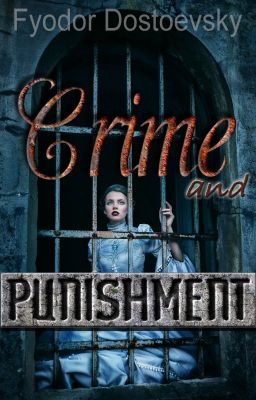
FydorDostoevsky
- Reads 104,266
- Votes 2,498
- Parts 42
Crime and Punishment is a novel by the Russian author Fyodor Dostoevsky. It was first published in the literary journal 'The Russian Messenger' in twelve monthly installments during 1866. Later, it was published in a single volume. It is the second of Dostoevsky's full-length novels following his return from 5 years of exile in Siberia. Crime and Punishment is considered the first great novel of his "mature" period of writing.
Crime and Punishment focuses on the mental anguish and moral dilemmas of Rodion Raskolnikov, an impoverished ex-student in Saint Petersburg who formulates a plan to kill an unscrupulous pawnbroker for her money. Before the killing, Raskolnikov believes that with the money he could liberate himself from poverty and go on to perform great deeds; but confusion, hesitation, and chance muddy his plan for a morally justifiable killing.
Cover made by the amazing Amber @The3dreamers.

JamesJoyce
- Reads 11,373
- Votes 139
- Parts 18
"Ulysses" chronicles the passage of Leopold Bloom through Dublin during an ordinary day, 16 June 1904. Ulysses is the Latinised name of Odysseus, the hero of Homer's poem Odyssey, and the novel establishes a series of parallels between its characters and events and those of the poem.
Cover by the wonderful @Azurina77.

FydorDostoevsky
- Reads 21,778
- Votes 643
- Parts 22
Notes from Underground, also translated as Notes from the Underground or Letters from the Underworld, is an 1864 novella by Fyodor Dostoyevsky. Notes is considered by many to be one of the first existentialist novels. It presents itself as an excerpt from the rambling memoirs of a bitter, isolated, unnamed narrator (generally referred to by critics as the Underground Man) who is a retired civil servant living in St. Petersburg. The first part of the story is told in monologue form, or the underground man's diary, and attacks emerging Western philosophy, especially Nikolay Chernyshevsky's What Is to Be Done?
The second part of the book is called "Apropos of the Wet Snow" and describes certain events that appear to be destroying and sometimes renewing the underground man, who acts as a first person, unreliable narrator and anti-hero

CharlotteBronte
- Reads 1,877,730
- Votes 25,202
- Parts 41
"Jane Eyre" follows the emotions and experiences of its eponymous character, including her growth to adulthood, and her love for Mr. Rochester, the byronic master of fictitious Thornfield Hall.

CharlesDickens
- Reads 75,346
- Votes 2,229
- Parts 66
The story traces the life of David Copperfield from childhood to maturity. David was born in Blunderstone, Suffolk, near Great Yarmouth, Norfolk, England, in 1820, six months after the death of his father. David spends his early years with his mother and their housekeeper, Peggotty. When he is seven years old, his mother re-marries Edward Murdstone. David is given good reason to dislike his stepfather and has similar feelings for Murdstone's sister Jane, who moves into the house soon afterwards. Murdstone thrashes David for falling behind in his studies. Following one of these thrashings, David bites him and soon afterwards is sent away to a boarding school, Salem House, with a ruthless headmaster, Mr. Creakle. There he befriends James Steerforth and Tommy Traddles.

johnmilton
- Reads 3,858
- Votes 125
- Parts 12
Paradise Lost is an epic poem in blank verse by the 17th-century English poet John Milton (1608-1674). The first version, published in 1667, consisted of ten books with over ten thousand lines of verse. A second edition followed in 1674, arranged into twelve books (in the manner of Virgil's Aeneid) with minor revisions throughout and a note on the verification.
It is considered by critics to be Milton's major work, and it helped solidify his reputation as one of the greatest English poets of his time.
The poem concerns the biblical story of the Fall of Man: the temptation of Adam and Eve by the fallen angel Satan and their expulsion from the Garden of Eden. Milton's purpose, stated in Book I, is to "justify the ways of God to men".