classics

12 stories

FydorDostoevsky
- Reads 26,572
- Votes 903
- Parts 96
The Brothers Karamazov, also translated as The Karamazov Brothers, is the final novel by the Russian author Fyodor Dostoevsky. Dostoevsky spent nearly two years writing The Brothers Karamazov, which was published as a serial in The Russian Messenger from January 1879 to November 1880.
The Brothers Karamazov is a passionate philosophical novel set in 19th-century Russia, that enters deeply into the ethical debates of God, free will, and morality. It is a spiritual drama of moral struggles concerning faith, doubt, judgment, and reason, set against a modernizing Russia, with a plot which revolves around the subject of patricide. Dostoevsky composed much of the novel in Staraya Russa, which inspired the main setting. Since its publication, it has been acclaimed as one of the supreme achievements in world literature.

FydorDostoevsky
- Reads 21,875
- Votes 646
- Parts 22
Notes from Underground, also translated as Notes from the Underground or Letters from the Underworld, is an 1864 novella by Fyodor Dostoyevsky. Notes is considered by many to be one of the first existentialist novels. It presents itself as an excerpt from the rambling memoirs of a bitter, isolated, unnamed narrator (generally referred to by critics as the Underground Man) who is a retired civil servant living in St. Petersburg. The first part of the story is told in monologue form, or the underground man's diary, and attacks emerging Western philosophy, especially Nikolay Chernyshevsky's What Is to Be Done?
The second part of the book is called "Apropos of the Wet Snow" and describes certain events that appear to be destroying and sometimes renewing the underground man, who acts as a first person, unreliable narrator and anti-hero

ch3rrycig4rettes
- Reads 1,148
- Votes 23
- Parts 5
(STORY ISNT MINE )Influenced by philosophers such as Søren Kierkegaard, Arthur Schopenhauer, and Friedrich Nietzsche, Camus introduces his philosophy of the absurd. The absurd lies in the juxtaposition between the fundamental human need to attribute meaning to life and the "unreasonable silence" of the universe in response.[1] Camus claims that the realization of the absurd does not justify suicide, and instead requires "revolt". He then outlines several approaches to the absurd life. In the final chapter, Camus compares the absurdity of man's life with the situation of Sisyphus, a figure of Greek mythology who was condemned to repeat forever the same meaningless task of pushing a boulder up a mountain, only to see it roll down again just as it nears the top. The essay concludes, "The struggle itself towards the heights is enough to fill a man's heart. One must imagine Sisyphus happy."
The work can be seen in relation to other absurdist works by Camus: the novel The Stranger (1942), the plays The Misunderstanding (1942) and Caligula (1944), and especially the essay The Rebel (1951).
+8 more
FydorDostoevsky
- Reads 104,529
- Votes 2,500
- Parts 42
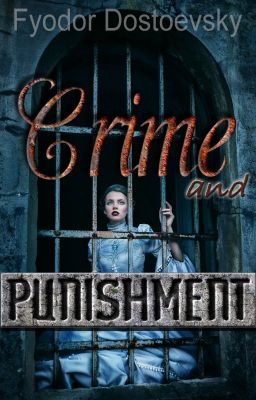
Crime and Punishment is a novel by the Russian author Fyodor Dostoevsky. It was first published in the literary journal 'The Russian Messenger' in twelve monthly installments during 1866. Later, it was published in a single volume. It is the second of Dostoevsky's full-length novels following his return from 5 years of exile in Siberia. Crime and Punishment is considered the first great novel of his "mature" period of writing.
Crime and Punishment focuses on the mental anguish and moral dilemmas of Rodion Raskolnikov, an impoverished ex-student in Saint Petersburg who formulates a plan to kill an unscrupulous pawnbroker for her money. Before the killing, Raskolnikov believes that with the money he could liberate himself from poverty and go on to perform great deeds; but confusion, hesitation, and chance muddy his plan for a morally justifiable killing.
Cover made by the amazing Amber @The3dreamers.


hgwells
- Reads 104,487
- Votes 1,431
- Parts 13
The Time Machine is a science fiction novel by H. G. Wells, published in 1895 and written as a frame narrative. Wells is generally credited with the popularization of the concept of time travel by using a vehicle that allows an operator to travel purposely and selectively forwards or backward in time. The term "time machine", coined by Wells, is now almost universally used to refer to such a vehicle.
The Time Machine has been adapted into three feature films of the same name, as well as two television versions, and a large number of comic book adaptations. It has also indirectly inspired many more works of fiction in many media productions.

hgwells
- Reads 23,971
- Votes 893
- Parts 29
The Invisible Man is a science fiction novella by H. G. Wells. Originally serialized in Pearson's Weekly in 1897, it was published as a novel the same year.
The Invisible Man of the title is Griffin, a scientist who has devoted himself to research into optics and invents a way to change a body's refractive index to that of air so that it neither absorbs nor reflects light and thus becomes invisible. He successfully carries out this procedure on himself, but fails in his attempt to reverse it.

JaneAusten
- Reads 606,518
- Votes 11,324
- Parts 50
Sense and Sensibility is set in southwest England between 1792 and 1797, and portrays the life and loves of the Dashwood sisters, Elinor and Marianne. The novel follows the young ladies to their new home, a meagre cottage on a distant relative's property, where they experience love, romance and heartbreak.

WilliamShakespeare
- Reads 4,204,143
- Votes 52,699
- Parts 27
Romeo and Juliet is a tragedy written by William Shakespeare early in his career about two young star-crossed lovers whose deaths ultimately reconcile their feuding families. It was among Shakespeare's most popular plays during his lifetime and along with Hamlet, is one of his most frequently performed plays. Today, the title characters are regarded as archetypal young lovers.
Cover done by @zuko_42

EdgarAllanPoe
- Reads 14,810
- Votes 387
- Parts 1
"The Cask of Amontillado" (sometimes spelled "The Casque of Amontillado") is a short story by Edgar Allan Poe, first published in the November 1846 issue of Godey's Lady's Book. The story, set in an unnamed Italian city at carnival time in an unspecified year, is about a man taking fatal revenge on a friend who, he believes, has insulted him. Like several of Poe's stories, and in keeping with the 19th-century fascination with the subject, the narrative revolves around a person being buried alive - in this case, by immurement. As in "The Black Cat" and "The Tell-Tale Heart", Poe conveys the story from the murderer's perspective.
Cover by the lovely @theygotnone