Real books <3

10 stories

EdgarAllanPoe
- Reads 7,396
- Votes 179
- Parts 9
"The Murders in the Rue Morgue" is a short story by Edgar Allan Poe published in Graham's Magazine in 1841. It has been recognized as the first modern detective story; Poe referred to it as one of his "tales of ratiocination".
C. Auguste Dupin is a man in Paris who solves the mystery of the brutal murder of two women. Numerous witnesses heard a suspect, though no one agrees on what language was spoken. At the murder scene, Dupin finds a hair that does not appear to be human.
As the first fictional detective, Poe's Dupin displays many traits which became literary conventions in subsequent fictional detectives, including Sherlock Holmes and Hercule Poirot. Many later characters, for example, follow Poe's model of the brilliant detective, his personal friend who serves as narrator, and the final revelation being presented before the reasoning that leads up to it. Dupin himself reappears in "The Mystery of Marie Rogêt" and "The Purloined Letter".

skoolsux21
- Reads 54,643
- Votes 753
- Parts 9
The Great Gatsby, F. Scott Fitzgerald's third book, stands as the supreme achievement of his career. This exemplary novel of the Jazz Age has been acclaimed by generations of readers. The story of the fabulously wealthy Jay Gatsby and his love for the beautiful Daisy Buchanan, of lavish parties on Long Island at a time when The New York Times noted "gin was the national drink and sex the national obsession," it is an exquisitely crafted tale of America in the 1920s.
+10 more

EdgarAllanPoe
- Reads 21,174
- Votes 912
- Parts 1
"The Raven" tells of a talking raven's mysterious visit to a distraught lover, tracing the man's slow fall into madness. The lover, often identified as being a student, is lamenting the loss of his love, Lenore. Sitting on a bust of Pallas, the raven seems to further instigate his distress with its constant repetition of the word "Nevermore".
Cover by @Lujayna


EnlightenmentLibrary
- Reads 10,993
- Votes 331
- Parts 7
From The Raven to The Tell Tale Heart, Poe's grim and gruesome greatest hits.
----
Edgar Allan Poe (January 19, 1809 to October 7, 1849) was an American writer, poet, critic and editor best known for evocative short stories and poems that captured the imagination and interest of readers around the world. His imaginative storytelling and tales of mystery and horror gave birth to the modern detective story.
+11 more

strawberrycheese08
- Reads 30,476
- Votes 1,735
- Parts 44
Sick of her cruel grandmother, Jane tries to reunite her estranged parents. ***This story belongs to L.M. Montgomery. I do not own anything.

FydorDostoevsky
- Reads 103,309
- Votes 2,490
- Parts 42
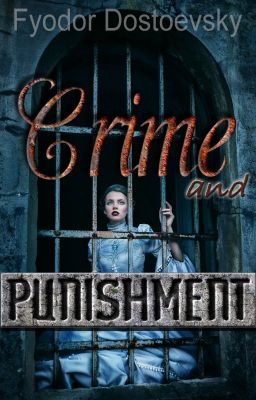
Crime and Punishment is a novel by the Russian author Fyodor Dostoevsky. It was first published in the literary journal 'The Russian Messenger' in twelve monthly installments during 1866. Later, it was published in a single volume. It is the second of Dostoevsky's full-length novels following his return from 5 years of exile in Siberia. Crime and Punishment is considered the first great novel of his "mature" period of writing.
Crime and Punishment focuses on the mental anguish and moral dilemmas of Rodion Raskolnikov, an impoverished ex-student in Saint Petersburg who formulates a plan to kill an unscrupulous pawnbroker for her money. Before the killing, Raskolnikov believes that with the money he could liberate himself from poverty and go on to perform great deeds; but confusion, hesitation, and chance muddy his plan for a morally justifiable killing.
Cover made by the amazing Amber @The3dreamers.

MASperry
- Reads 97
- Votes 4
- Parts 1
"Masque of the Red Death" follows Prince Prospero, who attempts to avoid a devastating plague, known as the Red Death, by hiding with his guests in his abbey where no one can get in or out. He holds a masquerade ball and, in the midst of the revelry, a mysterious figure appears.
*Edgar Allan Poe is one of my favorite authors/poets, and "Masque of the Red Death" is my favorite short story of his, so I thought I'd share it with you all. I hope you enjoy it: all credit goes to Edgar Allan Poe!*

FydorDostoevsky
- Reads 21,406
- Votes 637
- Parts 22
Notes from Underground, also translated as Notes from the Underground or Letters from the Underworld, is an 1864 novella by Fyodor Dostoyevsky. Notes is considered by many to be one of the first existentialist novels. It presents itself as an excerpt from the rambling memoirs of a bitter, isolated, unnamed narrator (generally referred to by critics as the Underground Man) who is a retired civil servant living in St. Petersburg. The first part of the story is told in monologue form, or the underground man's diary, and attacks emerging Western philosophy, especially Nikolay Chernyshevsky's What Is to Be Done?
The second part of the book is called "Apropos of the Wet Snow" and describes certain events that appear to be destroying and sometimes renewing the underground man, who acts as a first person, unreliable narrator and anti-hero