Ambot

10 stories

LewisCarroll
- Reads 1,240,457
- Votes 13,081
- Parts 12
"Alice's Adventures in Wonderland" tells of a girl named Alice who falls down a rabbit hole into a fantasy world populated by peculiar, anthropomorphic creatures. The tale plays with logic, giving the story lasting popularity with adults as well as children.

LewisCarroll
- Reads 72,174
- Votes 2,000
- Parts 12
"Through the Looking-Glass, and What Alice Found There" is the sequel to Alice's Adventures in Wonderland. The themes and settings of Through the Looking-Glass make it a kind of mirror image of Wonderland: the first book begins outdoors, in the warm month of May (4 May), uses frequent changes in size as a plot device, and draws on the imagery of playing cards; the second opens indoors on a snowy, wintry night exactly six months later, on 4 November (the day before Guy Fawkes Night), uses frequent changes in time and spatial directions as a plot device, and draws on the imagery of chess.

MaryShelley
- Reads 290,917
- Votes 7,199
- Parts 28
"Frankenstein; or, The Modern Prometheus" is about an eccentric scientist Victor Frankenstein, who creates a grotesque creature in an unorthodox scientific experiment.

addict-witha-pen
- Reads 15,906
- Votes 294
- Parts 19
All of (or most of) Edgar Allen Poe's short stories and poems.
[if you would like to see a story/poem added feel free to message me]
+2 more

Hungry4Potatoes
- Reads 45
- Votes 1
- Parts 1
Somokuto (A Grass and Tree Pagoda) is the most important book of haiku by Taneda Santoka (1882-1940). It was published by Yagumo Shorin of Tokyo in April,1940.
Santoka Taneda (birth name: Taneda Shōichi 種田 正一) is known for his free verse haiku which does not conform to the formal rules of traditional haiku.
These are only excerpts from Somokuto.

Hungry4Potatoes
- Reads 284
- Votes 15
- Parts 1
A short tale of a frustrated poet, Li Zheng, who gives up his post as a local official to devote himself to poetry, failing in his attempt to fulfill his life's desire of becoming a great poet he falls into madness and one night runs off into the wilderness after hearing his name being called.

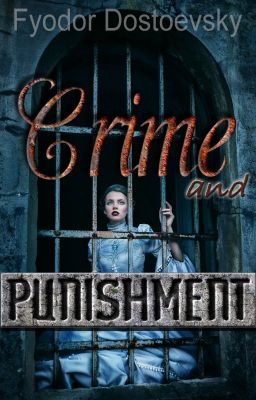
FydorDostoevsky
- Reads 103,874
- Votes 2,496
- Parts 42
Crime and Punishment is a novel by the Russian author Fyodor Dostoevsky. It was first published in the literary journal 'The Russian Messenger' in twelve monthly installments during 1866. Later, it was published in a single volume. It is the second of Dostoevsky's full-length novels following his return from 5 years of exile in Siberia. Crime and Punishment is considered the first great novel of his "mature" period of writing.
Crime and Punishment focuses on the mental anguish and moral dilemmas of Rodion Raskolnikov, an impoverished ex-student in Saint Petersburg who formulates a plan to kill an unscrupulous pawnbroker for her money. Before the killing, Raskolnikov believes that with the money he could liberate himself from poverty and go on to perform great deeds; but confusion, hesitation, and chance muddy his plan for a morally justifiable killing.
Cover made by the amazing Amber @The3dreamers.

FydorDostoevsky
- Reads 26,150
- Votes 902
- Parts 96
The Brothers Karamazov, also translated as The Karamazov Brothers, is the final novel by the Russian author Fyodor Dostoevsky. Dostoevsky spent nearly two years writing The Brothers Karamazov, which was published as a serial in The Russian Messenger from January 1879 to November 1880.
The Brothers Karamazov is a passionate philosophical novel set in 19th-century Russia, that enters deeply into the ethical debates of God, free will, and morality. It is a spiritual drama of moral struggles concerning faith, doubt, judgment, and reason, set against a modernizing Russia, with a plot which revolves around the subject of patricide. Dostoevsky composed much of the novel in Staraya Russa, which inspired the main setting. Since its publication, it has been acclaimed as one of the supreme achievements in world literature.

FydorDostoevsky
- Reads 21,592
- Votes 640
- Parts 22
Notes from Underground, also translated as Notes from the Underground or Letters from the Underworld, is an 1864 novella by Fyodor Dostoyevsky. Notes is considered by many to be one of the first existentialist novels. It presents itself as an excerpt from the rambling memoirs of a bitter, isolated, unnamed narrator (generally referred to by critics as the Underground Man) who is a retired civil servant living in St. Petersburg. The first part of the story is told in monologue form, or the underground man's diary, and attacks emerging Western philosophy, especially Nikolay Chernyshevsky's What Is to Be Done?
The second part of the book is called "Apropos of the Wet Snow" and describes certain events that appear to be destroying and sometimes renewing the underground man, who acts as a first person, unreliable narrator and anti-hero