•classics•

19 stories

HPLovecraft
- Reads 5,036
- Votes 114
- Parts 1
The Alchemist, by H.P. Lovecraft.
This short story was written in 1908, and first published in the November 1916 issue (No. 4) of the United Amateur.

WilliamShakespeare
- Reads 4,203,092
- Votes 52,679
- Parts 27
Romeo and Juliet is a tragedy written by William Shakespeare early in his career about two young star-crossed lovers whose deaths ultimately reconcile their feuding families. It was among Shakespeare's most popular plays during his lifetime and along with Hamlet, is one of his most frequently performed plays. Today, the title characters are regarded as archetypal young lovers.
Cover done by @zuko_42

OscarWilde
- Reads 1,234,687
- Votes 16,517
- Parts 21
"The Picture of Dorian Gray" tells of a young man named Dorian Gray, the subject of a painting by artist Basil Hallward. Basil is impressed by Dorian's beauty and becomes infatuated with him, believing his beauty is responsible for a new mode in his art. Dorian meets Lord Henry Wotton, a friend of Basil's, and becomes enthralled by Lord Henry's world view. Espousing a new hedonism, Lord Henry suggests the only things worth pursuing in life are beauty and fulfilment of the senses.
FydorDostoevsky
- Reads 103,611
- Votes 2,494
- Parts 42
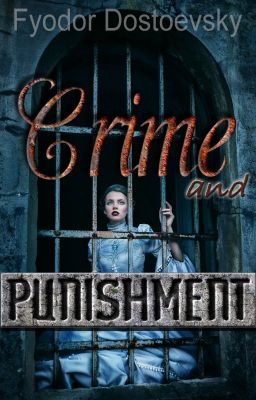
Crime and Punishment is a novel by the Russian author Fyodor Dostoevsky. It was first published in the literary journal 'The Russian Messenger' in twelve monthly installments during 1866. Later, it was published in a single volume. It is the second of Dostoevsky's full-length novels following his return from 5 years of exile in Siberia. Crime and Punishment is considered the first great novel of his "mature" period of writing.
Crime and Punishment focuses on the mental anguish and moral dilemmas of Rodion Raskolnikov, an impoverished ex-student in Saint Petersburg who formulates a plan to kill an unscrupulous pawnbroker for her money. Before the killing, Raskolnikov believes that with the money he could liberate himself from poverty and go on to perform great deeds; but confusion, hesitation, and chance muddy his plan for a morally justifiable killing.
Cover made by the amazing Amber @The3dreamers.

FydorDostoevsky
- Reads 26,056
- Votes 902
- Parts 96
The Brothers Karamazov, also translated as The Karamazov Brothers, is the final novel by the Russian author Fyodor Dostoevsky. Dostoevsky spent nearly two years writing The Brothers Karamazov, which was published as a serial in The Russian Messenger from January 1879 to November 1880.
The Brothers Karamazov is a passionate philosophical novel set in 19th-century Russia, that enters deeply into the ethical debates of God, free will, and morality. It is a spiritual drama of moral struggles concerning faith, doubt, judgment, and reason, set against a modernizing Russia, with a plot which revolves around the subject of patricide. Dostoevsky composed much of the novel in Staraya Russa, which inspired the main setting. Since its publication, it has been acclaimed as one of the supreme achievements in world literature.

Homer
- Reads 27,249
- Votes 379
- Parts 26
The Iliad (sometimes referred to as the Song of Ilion or Song of Ilium) is an ancient Greek epic poem in dactylic hexameter, traditionally attributed to Homer. Set during the Trojan War, the ten-year siege of the city of Troy (Ilium) by a coalition of Greek states, it tells of the battles and events during the weeks of a quarrel between King Agamemnon and the warrior Achilles.
The Iliad is paired with something of a sequel, the Odyssey, also attributed to Homer. Along with the Odyssey, the Iliad is among the oldest extant works of Western literature, and its written version is usually dated to around the 8th century BC. Recent statistical modelling based on language evolution gives a date of 760-710 BC.

EdgarAllanPoe
- Reads 21,180
- Votes 912
- Parts 1
"The Raven" tells of a talking raven's mysterious visit to a distraught lover, tracing the man's slow fall into madness. The lover, often identified as being a student, is lamenting the loss of his love, Lenore. Sitting on a bust of Pallas, the raven seems to further instigate his distress with its constant repetition of the word "Nevermore".
Cover by @Lujayna

WilliamShakespeare
- Reads 237,368
- Votes 4,400
- Parts 21
Set in the Kingdom of Denmark, "Hamlet" dramatizes the revenge Prince Hamlet exacts on his uncle Claudius for murdering King Hamlet, Claudius's brother and Prince Hamlet's father, and then succeeding to the throne and taking as his wife Gertrude, the old king's widow and Prince Hamlet's mother.
Cover by @vkbloodgood
+3 more

EdgarAllanPoe
- Reads 6,437
- Votes 144
- Parts 1
"The Purloined Letter" is a short story by American author Edgar Allan Poe. It is the third of his three detective stories featuring the fictional C. Auguste Dupin, the other two being "The Murders in the Rue Morgue" and "The Mystery of Marie Rogêt". These stories are considered to be important early forerunners of the modern detective story. It first appeared in the literary annual The Gift for 1845 (1844) and was soon reprinted in numerous journals and newspapers.
Cover by the lovely @KatrinHollister

MaryShelley
- Reads 290,823
- Votes 7,199
- Parts 28
"Frankenstein; or, The Modern Prometheus" is about an eccentric scientist Victor Frankenstein, who creates a grotesque creature in an unorthodox scientific experiment.