▶ classical literature

6 stories

OscarWilde
- Reads 1,235,368
- Votes 16,531
- Parts 21
"The Picture of Dorian Gray" tells of a young man named Dorian Gray, the subject of a painting by artist Basil Hallward. Basil is impressed by Dorian's beauty and becomes infatuated with him, believing his beauty is responsible for a new mode in his art. Dorian meets Lord Henry Wotton, a friend of Basil's, and becomes enthralled by Lord Henry's world view. Espousing a new hedonism, Lord Henry suggests the only things worth pursuing in life are beauty and fulfilment of the senses.

mauriceleblanc
- Reads 6,878
- Votes 110
- Parts 24
The rays of the September sun flooded the great halls of the old chateau of the Dukes of Charmerace, lighting up with their mellow glow the spoils of so many ages and many lands, jumbled together with the execrable taste which so often afflicts those whose only standard of value is money.

WilliamShakespeare
- Reads 158,089
- Votes 5,066
- Parts 155
Shakespeare's Sonnets is the title of a collection of 154 sonnets by William Shakespeare, which covers themes such as the passage of time, love, beauty and mortality. The first 126 sonnets are addressed to a young man; the last 28 to a woman.
The sonnets are almost all constructed from three quatrains, which are four-line stanzas, and a final couplet composed in iambic pentameter. This is also the meter used extensively in Shakespeare's plays.
The rhyme scheme is abab cdcd efef gg. Sonnets using this scheme are known as Shakespearean sonnets. Often, the beginning of the third quatrain marks the volta ("turn"), or the line in which the mood of the poem shifts, and the poet expresses a revelation or epiphany.
+6 more

EdgarAllanPoe
- Reads 7,432
- Votes 179
- Parts 9
"The Murders in the Rue Morgue" is a short story by Edgar Allan Poe published in Graham's Magazine in 1841. It has been recognized as the first modern detective story; Poe referred to it as one of his "tales of ratiocination".
C. Auguste Dupin is a man in Paris who solves the mystery of the brutal murder of two women. Numerous witnesses heard a suspect, though no one agrees on what language was spoken. At the murder scene, Dupin finds a hair that does not appear to be human.
As the first fictional detective, Poe's Dupin displays many traits which became literary conventions in subsequent fictional detectives, including Sherlock Holmes and Hercule Poirot. Many later characters, for example, follow Poe's model of the brilliant detective, his personal friend who serves as narrator, and the final revelation being presented before the reasoning that leads up to it. Dupin himself reappears in "The Mystery of Marie Rogêt" and "The Purloined Letter".
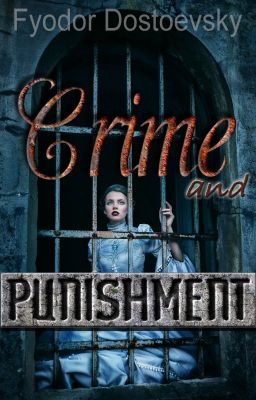
FydorDostoevsky
- Reads 104,406
- Votes 2,500
- Parts 42
Crime and Punishment is a novel by the Russian author Fyodor Dostoevsky. It was first published in the literary journal 'The Russian Messenger' in twelve monthly installments during 1866. Later, it was published in a single volume. It is the second of Dostoevsky's full-length novels following his return from 5 years of exile in Siberia. Crime and Punishment is considered the first great novel of his "mature" period of writing.
Crime and Punishment focuses on the mental anguish and moral dilemmas of Rodion Raskolnikov, an impoverished ex-student in Saint Petersburg who formulates a plan to kill an unscrupulous pawnbroker for her money. Before the killing, Raskolnikov believes that with the money he could liberate himself from poverty and go on to perform great deeds; but confusion, hesitation, and chance muddy his plan for a morally justifiable killing.
Cover made by the amazing Amber @The3dreamers.

HermanMelville
- Reads 259,916
- Votes 3,517
- Parts 138
"Moby-Dick" tells the adventures of wandering sailor Ishmael, and his voyage on the whaleship Pequod, commanded by Captain Ahab. Ishmael soon learns that Ahab has one purpose on this voyage: to seek out Moby Dick, a ferocious, enigmatic white sperm whale. In a previous encounter, the whale destroyed Ahab's boat and bit off his leg, which now drives Ahab to take revenge.