-CLASSICS-

7 stories

JaneAusten
- Reads 10,538,969
- Votes 223,564
- Parts 61
The story follows the main character Elizabeth Bennet as she deals with issues of manners, upbringing, morality, education, and marriage in the society of the landed gentry of early 19th-century England. Elizabeth is the second of five daughters of a country gentleman living near the fictional town of Meryton in Hertfordshire, near London.

JaneAusten
- Reads 289,044
- Votes 8,068
- Parts 24
More than eight years before the novel opens, Anne Elliot, then a lovely, thoughtful, warm-hearted 19 year old, accepted a proposal of marriage from the handsome young naval officer Frederick Wentworth. He was clever, confident, and ambitious, but poor and with no particular family connections to recommend him. Sir Walter, Anne's fatuous, snobbish father and her equally self-involved older sister Elizabeth were dissatisfied with her choice, maintaining that he was no match for an Elliot of Kellynch Hall, the family estate. Her older friend and mentor, Lady Russell, acting in place of Anne's late mother, persuaded her to break the engagement.
Now 27 and still unmarried, Anne re-encounters her former love when his sister and brother-in-law, the Crofts, take out a lease on Kellynch. Wentworth is now a captain and wealthy from maritime victories in the Napoleonic wars. However, he has not forgiven Anne for rejecting him. While publicly declaring that he is ready to marry any suitable young woman who catches his fancy, he privately resolves that he is ready to become attached to any appealing young woman except for Anne Elliot.

JaneAusten
- Reads 605,745
- Votes 11,275
- Parts 50
Sense and Sensibility is set in southwest England between 1792 and 1797, and portrays the life and loves of the Dashwood sisters, Elinor and Marianne. The novel follows the young ladies to their new home, a meagre cottage on a distant relative's property, where they experience love, romance and heartbreak.

EdgarAllanPoe
- Reads 7,390
- Votes 179
- Parts 9
"The Murders in the Rue Morgue" is a short story by Edgar Allan Poe published in Graham's Magazine in 1841. It has been recognized as the first modern detective story; Poe referred to it as one of his "tales of ratiocination".
C. Auguste Dupin is a man in Paris who solves the mystery of the brutal murder of two women. Numerous witnesses heard a suspect, though no one agrees on what language was spoken. At the murder scene, Dupin finds a hair that does not appear to be human.
As the first fictional detective, Poe's Dupin displays many traits which became literary conventions in subsequent fictional detectives, including Sherlock Holmes and Hercule Poirot. Many later characters, for example, follow Poe's model of the brilliant detective, his personal friend who serves as narrator, and the final revelation being presented before the reasoning that leads up to it. Dupin himself reappears in "The Mystery of Marie Rogêt" and "The Purloined Letter".

FydorDostoevsky
- Reads 21,387
- Votes 637
- Parts 22
Notes from Underground, also translated as Notes from the Underground or Letters from the Underworld, is an 1864 novella by Fyodor Dostoyevsky. Notes is considered by many to be one of the first existentialist novels. It presents itself as an excerpt from the rambling memoirs of a bitter, isolated, unnamed narrator (generally referred to by critics as the Underground Man) who is a retired civil servant living in St. Petersburg. The first part of the story is told in monologue form, or the underground man's diary, and attacks emerging Western philosophy, especially Nikolay Chernyshevsky's What Is to Be Done?
The second part of the book is called "Apropos of the Wet Snow" and describes certain events that appear to be destroying and sometimes renewing the underground man, who acts as a first person, unreliable narrator and anti-hero

FydorDostoevsky
- Reads 25,871
- Votes 902
- Parts 96
The Brothers Karamazov, also translated as The Karamazov Brothers, is the final novel by the Russian author Fyodor Dostoevsky. Dostoevsky spent nearly two years writing The Brothers Karamazov, which was published as a serial in The Russian Messenger from January 1879 to November 1880.
The Brothers Karamazov is a passionate philosophical novel set in 19th-century Russia, that enters deeply into the ethical debates of God, free will, and morality. It is a spiritual drama of moral struggles concerning faith, doubt, judgment, and reason, set against a modernizing Russia, with a plot which revolves around the subject of patricide. Dostoevsky composed much of the novel in Staraya Russa, which inspired the main setting. Since its publication, it has been acclaimed as one of the supreme achievements in world literature.
FydorDostoevsky
- Reads 103,154
- Votes 2,489
- Parts 42
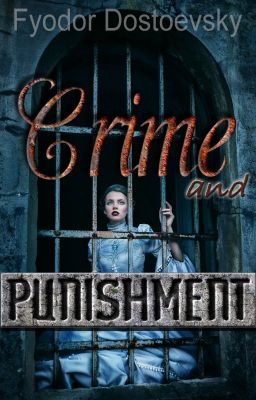
Crime and Punishment is a novel by the Russian author Fyodor Dostoevsky. It was first published in the literary journal 'The Russian Messenger' in twelve monthly installments during 1866. Later, it was published in a single volume. It is the second of Dostoevsky's full-length novels following his return from 5 years of exile in Siberia. Crime and Punishment is considered the first great novel of his "mature" period of writing.
Crime and Punishment focuses on the mental anguish and moral dilemmas of Rodion Raskolnikov, an impoverished ex-student in Saint Petersburg who formulates a plan to kill an unscrupulous pawnbroker for her money. Before the killing, Raskolnikov believes that with the money he could liberate himself from poverty and go on to perform great deeds; but confusion, hesitation, and chance muddy his plan for a morally justifiable killing.
Cover made by the amazing Amber @The3dreamers.
+5 more