BSD Ref.

11 stories

aarcanechaoss
- Reads 3,180
- Votes 67
- Parts 7
Atsushi Nakajima lived an awful life at the Orphanage but what if someone adopted him while he was young? A woman with hair as white as snow and eyes a startling silver and a man who cares for orphans far to much with rust coloured hair and dark eyes.
They save Atsushi, they give him a home, a chance to live and a job. A very important one.
Even reapers need apprentices.
+8 more

Questionablethingz
- Reads 2,302
- Votes 81
- Parts 11
Me and Alex were joking around and this is the result, enjoy
We do not own any of bungou stray dogs, all credits to: Kafka Asagiri & Sango Harukawa
(In this book, everyone is considered a main character)

mathsskov
- Reads 7,009
- Votes 152
- Parts 9
The post-war period in Japan was one of immense social change as Japanese society adjusted to the shock of defeat and to the occupation of Japan by American forces and their allies. Osamu Dazai's The Setting Sun takes this milieu as its background to tell the story of the decline of a minor aristocratic family.
The story is told through the eyes of Kazuko, the unmarried daughter of a widowed aristocrat. Her search for self meaning in a society devoid of use for her forms the crux of Dazai's novel. It is a sad story, and structurally is a novel very much within the confines of the Japanese take on the novel in a way reminiscent of authors such as Nobel Prize winner Yasunari Kawabata - the social interactions are peripheral and understated, nuances must be drawn, and for readers more used to Western novelistic forms this comes across as being rather wishy-washy.
Kazuko's mother falls ill, and due to their financial circumstances they are forced to take a cottage in the countryside. Her brother, who became addicted to opium during the war is missing. When he returns, Kazuko attempts to form a liaison with the novelist Uehara. This romantic displacement only furthers to deepen her alienation from society


lumina_kez
- Reads 354
- Votes 14
- Parts 1
Chuuya jumps. He's knows that voice... Of course he knows it, but-
No way. There is just no way his day is getting so much worse.
"Dazai!,"calls Ranpo, and Chuuya's heart does a flip. He can't decide whether to hate that damned Guild author more or this shitty excuse for a brown-haired man in front of him.
ranpo and chuuya in poes novel

BramStoker
- Reads 351,300
- Votes 6,944
- Parts 27
Famous for introducing the character of the vampire Count Dracula, "Dracula" tells the story of Dracula's attempt to move from Transylvania to England, and the battle between Dracula and a small group of men and women led by Professor Abraham Van Helsing.

Habecca
- Reads 60,507
- Votes 1,547
- Parts 40
This has most of Edgar Allan Poe's poems, or short stories.
I do not own the rights to any of them, just simply sharing his work!

mathsskov
- Reads 2,444
- Votes 57
- Parts 16
This collection features a brilliant new translation of the Japanese master's stories, from the source for the movie Rashōmon to his later, more autobiographical writings.
Ryūnosuke Akutagawa (1892-1927) is one of Japan's foremost stylists - a modernist master whose short stories are marked by highly original imagery, cynicism, beauty and wild humour. 'Rashōmon' and 'In a Bamboo Grove' inspired Kurosawa's magnificent film and depict a past in which morality is turned upside down, while tales such as 'The Nose', 'O-Gin' and 'Loyalty' paint a rich and imaginative picture of a medieval Japan peopled by Shoguns and priests, vagrants and peasants. And in later works such as 'Death Register', 'The Life of a Stupid Man' and 'Spinning Gears', Akutagawa drew from his own life to devastating effect, revealing his intense melancholy and terror of madness in exquisitely moving impressionistic stories.

FydorDostoevsky
- Reads 26,153
- Votes 902
- Parts 96
The Brothers Karamazov, also translated as The Karamazov Brothers, is the final novel by the Russian author Fyodor Dostoevsky. Dostoevsky spent nearly two years writing The Brothers Karamazov, which was published as a serial in The Russian Messenger from January 1879 to November 1880.
The Brothers Karamazov is a passionate philosophical novel set in 19th-century Russia, that enters deeply into the ethical debates of God, free will, and morality. It is a spiritual drama of moral struggles concerning faith, doubt, judgment, and reason, set against a modernizing Russia, with a plot which revolves around the subject of patricide. Dostoevsky composed much of the novel in Staraya Russa, which inspired the main setting. Since its publication, it has been acclaimed as one of the supreme achievements in world literature.
FydorDostoevsky
- Reads 103,877
- Votes 2,496
- Parts 42
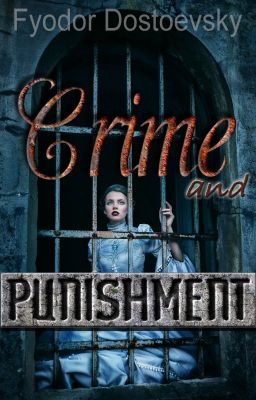
Crime and Punishment is a novel by the Russian author Fyodor Dostoevsky. It was first published in the literary journal 'The Russian Messenger' in twelve monthly installments during 1866. Later, it was published in a single volume. It is the second of Dostoevsky's full-length novels following his return from 5 years of exile in Siberia. Crime and Punishment is considered the first great novel of his "mature" period of writing.
Crime and Punishment focuses on the mental anguish and moral dilemmas of Rodion Raskolnikov, an impoverished ex-student in Saint Petersburg who formulates a plan to kill an unscrupulous pawnbroker for her money. Before the killing, Raskolnikov believes that with the money he could liberate himself from poverty and go on to perform great deeds; but confusion, hesitation, and chance muddy his plan for a morally justifiable killing.
Cover made by the amazing Amber @The3dreamers.