woah

16 stories

LouisaMayAlcott
- Reads 684,524
- Votes 16,071
- Parts 47
"Little Women" follows the lives of four sisters – Meg, Jo, Beth, and Amy March – and is loosely based on the author's childhood experiences with her three sisters.

OscarWilde
- Reads 1,234,692
- Votes 16,517
- Parts 21
"The Picture of Dorian Gray" tells of a young man named Dorian Gray, the subject of a painting by artist Basil Hallward. Basil is impressed by Dorian's beauty and becomes infatuated with him, believing his beauty is responsible for a new mode in his art. Dorian meets Lord Henry Wotton, a friend of Basil's, and becomes enthralled by Lord Henry's world view. Espousing a new hedonism, Lord Henry suggests the only things worth pursuing in life are beauty and fulfilment of the senses.

BramStoker
- Reads 351,241
- Votes 6,944
- Parts 27
Famous for introducing the character of the vampire Count Dracula, "Dracula" tells the story of Dracula's attempt to move from Transylvania to England, and the battle between Dracula and a small group of men and women led by Professor Abraham Van Helsing.

WilliamShakespeare
- Reads 100,015
- Votes 1,827
- Parts 19
The Tragedy of Julius Caesar (First Folio title: The Tragedie of Iulius Cæsar) is a history play and tragedy by William Shakespeare, believed to have been written in 1599. It is one of several plays written by Shakespeare based on true events from Roman history, which also include Coriolanus and Antony and Cleopatra.
Although the play is named Julius Caesar, Brutus speaks more than four times as many lines as the title character; and the central psychological drama of the play focuses on Brutus' struggle between the conflicting demands of honour, patriotism, and friendship.
Cover by the wonderful @SaadSohail_.

WilliamShakespeare
- Reads 4,203,110
- Votes 52,679
- Parts 27
Romeo and Juliet is a tragedy written by William Shakespeare early in his career about two young star-crossed lovers whose deaths ultimately reconcile their feuding families. It was among Shakespeare's most popular plays during his lifetime and along with Hamlet, is one of his most frequently performed plays. Today, the title characters are regarded as archetypal young lovers.
Cover done by @zuko_42
+4 more

CharlotteBronte
- Reads 1,876,933
- Votes 25,190
- Parts 41
"Jane Eyre" follows the emotions and experiences of its eponymous character, including her growth to adulthood, and her love for Mr. Rochester, the byronic master of fictitious Thornfield Hall.

EdgarAllanPoe
- Reads 21,180
- Votes 912
- Parts 1
"The Raven" tells of a talking raven's mysterious visit to a distraught lover, tracing the man's slow fall into madness. The lover, often identified as being a student, is lamenting the loss of his love, Lenore. Sitting on a bust of Pallas, the raven seems to further instigate his distress with its constant repetition of the word "Nevermore".
Cover by @Lujayna

EdgarAllanPoe
- Reads 14,801
- Votes 387
- Parts 1
"The Cask of Amontillado" (sometimes spelled "The Casque of Amontillado") is a short story by Edgar Allan Poe, first published in the November 1846 issue of Godey's Lady's Book. The story, set in an unnamed Italian city at carnival time in an unspecified year, is about a man taking fatal revenge on a friend who, he believes, has insulted him. Like several of Poe's stories, and in keeping with the 19th-century fascination with the subject, the narrative revolves around a person being buried alive - in this case, by immurement. As in "The Black Cat" and "The Tell-Tale Heart", Poe conveys the story from the murderer's perspective.
Cover by the lovely @theygotnone

EdgarAllanPoe
- Reads 21,794
- Votes 1,108
- Parts 1
"The Tell-Tale Heart" is a short story by American writer Edgar Allan Poe, first published in 1843. It is relayed by an unnamed narrator who endeavors to convince the reader of his sanity while simultaneously describing a murder he committed. The victim was an old man with a filmy "vulture-eye", as the narrator calls it. The narrator emphasizes the careful calculation of the murder, and he hides the body by dismembering it, and hiding it under the floorboards. Ultimately, the narrator's feelings of guilt, or a mental disturbance, result in him hearing a thumping sound, which he interprets as the dead man's beating heart.
Cover by the lovely @FayLane.
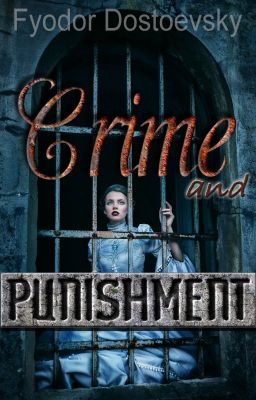
FydorDostoevsky
- Reads 103,632
- Votes 2,495
- Parts 42
Crime and Punishment is a novel by the Russian author Fyodor Dostoevsky. It was first published in the literary journal 'The Russian Messenger' in twelve monthly installments during 1866. Later, it was published in a single volume. It is the second of Dostoevsky's full-length novels following his return from 5 years of exile in Siberia. Crime and Punishment is considered the first great novel of his "mature" period of writing.
Crime and Punishment focuses on the mental anguish and moral dilemmas of Rodion Raskolnikov, an impoverished ex-student in Saint Petersburg who formulates a plan to kill an unscrupulous pawnbroker for her money. Before the killing, Raskolnikov believes that with the money he could liberate himself from poverty and go on to perform great deeds; but confusion, hesitation, and chance muddy his plan for a morally justifiable killing.
Cover made by the amazing Amber @The3dreamers.