2025 memories

8 stories

hgwells
- Reads 23,582
- Votes 888
- Parts 29
The Invisible Man is a science fiction novella by H. G. Wells. Originally serialized in Pearson's Weekly in 1897, it was published as a novel the same year.
The Invisible Man of the title is Griffin, a scientist who has devoted himself to research into optics and invents a way to change a body's refractive index to that of air so that it neither absorbs nor reflects light and thus becomes invisible. He successfully carries out this procedure on himself, but fails in his attempt to reverse it.

JamesJoyce
- Reads 7,064
- Votes 73
- Parts 5
"A Portrait of the Artist as a Young Man" traces the intellectual and religio-philosophical awakening of young Stephen Dedalus as he begins to question and rebel against the Catholic and Irish conventions with which he has been raised. He finally leaves for abroad to pursue his ambitions as an artist.

FydorDostoevsky
- Reads 20,222
- Votes 608
- Parts 22
Notes from Underground, also translated as Notes from the Underground or Letters from the Underworld, is an 1864 novella by Fyodor Dostoyevsky. Notes is considered by many to be one of the first existentialist novels. It presents itself as an excerpt from the rambling memoirs of a bitter, isolated, unnamed narrator (generally referred to by critics as the Underground Man) who is a retired civil servant living in St. Petersburg. The first part of the story is told in monologue form, or the underground man's diary, and attacks emerging Western philosophy, especially Nikolay Chernyshevsky's What Is to Be Done?
The second part of the book is called "Apropos of the Wet Snow" and describes certain events that appear to be destroying and sometimes renewing the underground man, who acts as a first person, unreliable narrator and anti-hero


HPLovecraft
- Reads 952
- Votes 49
- Parts 1
The Beast in the Cave, by H.P. Lovecraft.
This short story was written in 1905, and was first published in the June 1918 issue (No. 7) of the amateur press journal the Vagrant.
+3 more
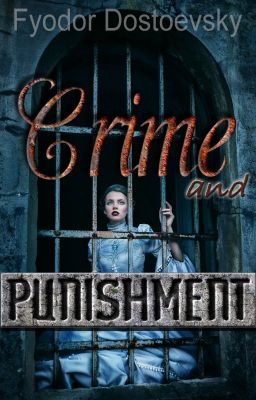
FydorDostoevsky
- Reads 99,372
- Votes 2,391
- Parts 42
Crime and Punishment is a novel by the Russian author Fyodor Dostoevsky. It was first published in the literary journal 'The Russian Messenger' in twelve monthly installments during 1866. Later, it was published in a single volume. It is the second of Dostoevsky's full-length novels following his return from 5 years of exile in Siberia. Crime and Punishment is considered the first great novel of his "mature" period of writing.
Crime and Punishment focuses on the mental anguish and moral dilemmas of Rodion Raskolnikov, an impoverished ex-student in Saint Petersburg who formulates a plan to kill an unscrupulous pawnbroker for her money. Before the killing, Raskolnikov believes that with the money he could liberate himself from poverty and go on to perform great deeds; but confusion, hesitation, and chance muddy his plan for a morally justifiable killing.
Cover made by the amazing Amber @The3dreamers.

FydorDostoevsky
- Reads 24,146
- Votes 792
- Parts 96
The Brothers Karamazov, also translated as The Karamazov Brothers, is the final novel by the Russian author Fyodor Dostoevsky. Dostoevsky spent nearly two years writing The Brothers Karamazov, which was published as a serial in The Russian Messenger from January 1879 to November 1880.
The Brothers Karamazov is a passionate philosophical novel set in 19th-century Russia, that enters deeply into the ethical debates of God, free will, and morality. It is a spiritual drama of moral struggles concerning faith, doubt, judgment, and reason, set against a modernizing Russia, with a plot which revolves around the subject of patricide. Dostoevsky composed much of the novel in Staraya Russa, which inspired the main setting. Since its publication, it has been acclaimed as one of the supreme achievements in world literature.

GeorgeOrwell
- Reads 36,566
- Votes 873
- Parts 11
Animal Farm is an allegorical novella by George Orwell, first published in England on 17 August 1945. According to Orwell, the book reflects events leading up to the Russian Revolution of 1917 and then on into the Stalinist era of the Soviet Union.
Orwell wrote the book between November 1943 and February 1944, when the UK was in its wartime alliance with the Soviet Union and the British people and intelligentsia held Stalin in high esteem. It became a great commercial success when it did appear partly because international relations were transformed as the wartime alliance gave way to the Cold War.
Time magazine chose the book as one of the 100 best English-language novels (1923 to 2005). It also featured at number 31 on the Modern Library List of Best 20th-Century Novels. It won a Retrospective Hugo Award in 1996, and is included in the Great Books of the Western World selection.