Literature

29 stories

CharlesDickens
- Reads 363,234
- Votes 4,777
- Parts 46
The novel depicts the plight of the French peasantry demoralized by the French aristocracy in the years leading up to the revolution, the corresponding brutality demonstrated by the revolutionaries toward the former aristocrats in the early years of the revolution, and many unflattering social parallels with life in London during the same time period. It follows the lives of several protagonists through these events. The most notable are Charles Darnay and Sydney Carton. Darnay is a former French aristocrat who falls victim to the indiscriminate wrath of the revolution despite his virtuous nature, and Carton is a dissipated English barrister who endeavors to redeem his ill-spent life out of his unrequited love for Darnay's wife.
Cover art done by @orangedusk

kooljay
- Reads 731
- Votes 4
- Parts 40
"Jane Eyre is a novel by English writer Charlotte Brontë on 16 October 1847. Jane Eyre follows the experiences of its eponymous heroine, including her growth to adulthood and her love for Mr. Rochester, the brooding master of Thornfield Hall." -Wikipedia
"Orphaned as a child, Jane has felt an outcast her whole young life. Her courage is tested once again when she arrives at Thornfield Hall, where she has been hired by the brooding, proud Edward Rochester to care for his ward Adèle. Jane finds herself drawn to his troubled yet kind spirit. She falls in love. Hard.
But there is a terrifying secret inside the gloomy, forbidding Thornfield Hall. Is Rochester hiding from Jane? Will Jane be left heartbroken and exiled once again?" -Goodreads
More readable version of "Jane Eyre: An Autobiography" from the Gutenberg library.

davidhlawrence
- Reads 5,043
- Votes 117
- Parts 16
Sons and Lovers is a 1913 novel by the English writer D. H. Lawrence, originally published by B.W. Huebsch Publishers. The Modern Library placed it ninth on their list of the 100 best novels of the 20th century. While the novel initially received a lukewarm critical reception, along with allegations of obscenity, it is today regarded as a masterpiece by many critics and is often regarded as Lawrence's finest achievement.

LeoTolstoy
- Reads 1,433,032
- Votes 29,766
- Parts 239
"Anna Karenina" is the tragedy of married aristocrat and socialite Anna Karenina and her affair with the affluent Count Vronsky. The story starts when she arrives in the midst of a family broken up by her brother's unbridled womanizing—something that prefigures her own later situation, though with less tolerance for her by others.


FydorDostoevsky
- Reads 104,224
- Votes 2,497
- Parts 42
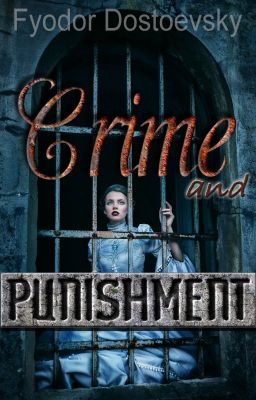
Crime and Punishment is a novel by the Russian author Fyodor Dostoevsky. It was first published in the literary journal 'The Russian Messenger' in twelve monthly installments during 1866. Later, it was published in a single volume. It is the second of Dostoevsky's full-length novels following his return from 5 years of exile in Siberia. Crime and Punishment is considered the first great novel of his "mature" period of writing.
Crime and Punishment focuses on the mental anguish and moral dilemmas of Rodion Raskolnikov, an impoverished ex-student in Saint Petersburg who formulates a plan to kill an unscrupulous pawnbroker for her money. Before the killing, Raskolnikov believes that with the money he could liberate himself from poverty and go on to perform great deeds; but confusion, hesitation, and chance muddy his plan for a morally justifiable killing.
Cover made by the amazing Amber @The3dreamers.

BramStoker
- Reads 351,446
- Votes 6,946
- Parts 27
Famous for introducing the character of the vampire Count Dracula, "Dracula" tells the story of Dracula's attempt to move from Transylvania to England, and the battle between Dracula and a small group of men and women led by Professor Abraham Van Helsing.


lostinlettersmovt
- Reads 1,812
- Votes 109
- Parts 19
Entered the Public Domain in 2022!
The quintessential novel of the Lost Generation, The Sun Also Rises (Fiesta) is one of Ernest Hemingway's masterpieces and a classic example of his sparse but powerful writing style. A poignant look at the disillusionment and angst of the post-World War I generation, the novel introduces two of Hemingway's most unforgettable characters: Jake Barnes and Lady Brett Ashley. The story follows the flamboyant Brett and the hapless Jake as they journey from the wild nightlife of 1920s Paris to the brutal bullfighting rings of Spain with a motley group of expatriates. It is an age of moral bankruptcy, spiritual dissolution, unrealized love, and vanishing illusions. First published in 1926, The Sun Also Rises helped to establish Hemingway as one of the greatest writers of the twentieth century.