wabisabi1wabisabi11's Reading List

5 stories

mathsskov
- Reads 6,775
- Votes 150
- Parts 9
The post-war period in Japan was one of immense social change as Japanese society adjusted to the shock of defeat and to the occupation of Japan by American forces and their allies. Osamu Dazai's The Setting Sun takes this milieu as its background to tell the story of the decline of a minor aristocratic family.
The story is told through the eyes of Kazuko, the unmarried daughter of a widowed aristocrat. Her search for self meaning in a society devoid of use for her forms the crux of Dazai's novel. It is a sad story, and structurally is a novel very much within the confines of the Japanese take on the novel in a way reminiscent of authors such as Nobel Prize winner Yasunari Kawabata - the social interactions are peripheral and understated, nuances must be drawn, and for readers more used to Western novelistic forms this comes across as being rather wishy-washy.
Kazuko's mother falls ill, and due to their financial circumstances they are forced to take a cottage in the countryside. Her brother, who became addicted to opium during the war is missing. When he returns, Kazuko attempts to form a liaison with the novelist Uehara. This romantic displacement only furthers to deepen her alienation from society


KillYourSinsAlone
- Reads 173
- Votes 50
- Parts 16
Fra is shaped by self-awareness, trauma, contradicting thoughts and feelings, and by being a failed nihilist all at once. He sees the world with unforgiving clarity and retells his experiences with a disgustingly honest, almost too-confessional voice; shameful thoughts, taboo urges, the parts that make us "bad" friends, and the desires we can't shake off.
Therapy was supposed to fix him, yet all it ever did was make him more painfully aware of everything wrong. He knew the causes, the patterns, the diagnoses-none of it helped. He walked into every session already knowing the answers and walked out with nothing to do with them. A mind that understands itself too well and still can't heal is its own kind of hell.
Despite wanting to be numb, he isn't numb enough to stop caring-yet not hopeful enough to start living the way he, or society, insists he should. Knowing exactly what's wrong yet having no idea what to do with that knowledge is only one of the many tortures his emotional intelligence has handed him.
[This story is a 1st person view based one, Fra and the author are not the same person
characters Like Ivan or other ones may be based on real experiences but aren't real people and made up]

FydorDostoevsky
- Reads 20,006
- Votes 608
- Parts 22
Notes from Underground, also translated as Notes from the Underground or Letters from the Underworld, is an 1864 novella by Fyodor Dostoyevsky. Notes is considered by many to be one of the first existentialist novels. It presents itself as an excerpt from the rambling memoirs of a bitter, isolated, unnamed narrator (generally referred to by critics as the Underground Man) who is a retired civil servant living in St. Petersburg. The first part of the story is told in monologue form, or the underground man's diary, and attacks emerging Western philosophy, especially Nikolay Chernyshevsky's What Is to Be Done?
The second part of the book is called "Apropos of the Wet Snow" and describes certain events that appear to be destroying and sometimes renewing the underground man, who acts as a first person, unreliable narrator and anti-hero
FydorDostoevsky
- Reads 98,477
- Votes 2,377
- Parts 42
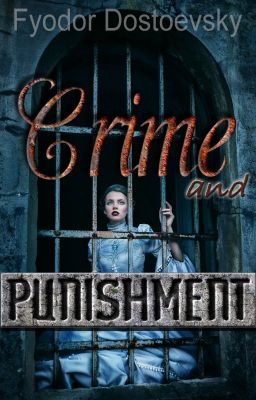
Crime and Punishment is a novel by the Russian author Fyodor Dostoevsky. It was first published in the literary journal 'The Russian Messenger' in twelve monthly installments during 1866. Later, it was published in a single volume. It is the second of Dostoevsky's full-length novels following his return from 5 years of exile in Siberia. Crime and Punishment is considered the first great novel of his "mature" period of writing.
Crime and Punishment focuses on the mental anguish and moral dilemmas of Rodion Raskolnikov, an impoverished ex-student in Saint Petersburg who formulates a plan to kill an unscrupulous pawnbroker for her money. Before the killing, Raskolnikov believes that with the money he could liberate himself from poverty and go on to perform great deeds; but confusion, hesitation, and chance muddy his plan for a morally justifiable killing.
Cover made by the amazing Amber @The3dreamers.