IoannaMilidou's Reading List

114 stories
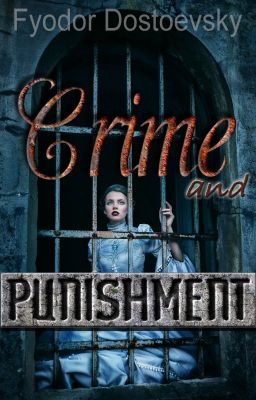
FydorDostoevsky
- Reads 103,588
- Votes 2,494
- Parts 42
Crime and Punishment is a novel by the Russian author Fyodor Dostoevsky. It was first published in the literary journal 'The Russian Messenger' in twelve monthly installments during 1866. Later, it was published in a single volume. It is the second of Dostoevsky's full-length novels following his return from 5 years of exile in Siberia. Crime and Punishment is considered the first great novel of his "mature" period of writing.
Crime and Punishment focuses on the mental anguish and moral dilemmas of Rodion Raskolnikov, an impoverished ex-student in Saint Petersburg who formulates a plan to kill an unscrupulous pawnbroker for her money. Before the killing, Raskolnikov believes that with the money he could liberate himself from poverty and go on to perform great deeds; but confusion, hesitation, and chance muddy his plan for a morally justifiable killing.
Cover made by the amazing Amber @The3dreamers.

BannedBooks
- Reads 138,494
- Votes 632
- Parts 16
This text has been banned in the United States for issues of obscenity. Also known as "One Thousand and One Nights", it is a collection of Middle Eastern and South Asian stories and folk tales compiled in Arabic during the Islamic Golden Age. The Arabian Nights is the English language edition selected and edited by Andrew Lang. Some of the most popular stories in it are "Aladdin's Wonderful Lamp", "Ali Baba and the Forty Thieves" and "The Seven Voyages of Sinbad the Sailor".

EdgarAllanPoe
- Reads 4,419
- Votes 133
- Parts 1
"Ligeia" is an early short story by American writer Edgar Allan Poe, first published in 1838. The story follows an unnamed narrator and his wife Ligeia, a beautiful and intelligent raven-haired woman. She falls ill, composes "The Conqueror Worm", and quotes lines attributed to Joseph Glanvill (which suggest that life is sustainable only through willpower) shortly before dying. After her death, the narrator marries the Lady Rowena. Rowena becomes ill and she dies as well.
The distraught narrator stays with her body overnight and watches as Rowena slowly comes back from the dead - though she has transformed into Ligeia. The story may be the narrator's opium-induced hallucination and there is debate whether the story was a satire.
Cover by the lovely @theynotgone

GeorgeEliot
- Reads 1,602
- Votes 75
- Parts 56
Adam Bede, the first novel written by George Eliot (the pen name of Mary Ann Evans), was published in 1859. It was published pseudonymously, even though Evans was a well-published and highly respected scholar of her time. The novel has remained in print ever since and is used in university studies of 19th-century English literature.
The story's plot follows four characters' rural lives in the fictional community of Hayslope-a rural, pastoral and close-knit community in 1799. The novel revolves around a love "rectangle" among beautiful but self-absorbed Hetty Sorrel; Captain Arthur Donnithorne, the young squire who seduces her; Adam Bede, her unacknowledged suitor; and Dinah Morris, Hetty's cousin, a fervent, virtuous and beautiful Methodist lay preacher.

HPLovecraft
- Reads 777
- Votes 21
- Parts 1
The Street, by H.P. Lovecraft.
This short story was written in 1919, and was first published in
the December 1920 issue (No. 8) of the amateur journal The
Wolverine.

DanielDefoe
- Reads 34,652
- Votes 607
- Parts 20
Robinson Crusoe is a novel by Daniel Defoe, first published on 25 April 1719. The first edition credited the work's protagonist Robinson Crusoe as its author, leading many readers to believe he was a real person and the book a travelogue of true incidents.
Epistolary, confessional, and didactic in form, the book is presented as an autobiography of the title character (whose birth name is Robinson Kreutznaer)-a castaway who spends twenty-eight years on a remote tropical desert island near Trinidad, encountering cannibals, captives, and mutineers, before ultimately being rescued.

VictorHugo
- Reads 3,870
- Votes 126
- Parts 67
Jean Valjean is the protagonist of Victor Hugo's 1862 novel Les Misérables. Hugo depicts the character's 19-year-long struggle to lead a normal life after serving a prison sentence for stealing bread to feed his sister's children during a time of economic depression and various attempts to escape from prison. Valjean is also known in the novel as Monsieur Madeleine, Ultime Fauchelevent, Monsieur Leblanc, and Urbain Fabre.
Valjean and Police Inspector Javert, who repeatedly encounters Valjean and attempts to return him to prison, have become archetypes in literary culture. In the popular imagination, the character of Jean Valjean came to represent both Hugo himself and leftist sentiment.
+3 more

VictorHugo
- Reads 5,526
- Votes 338
- Parts 76
Cosette is a fictional character in the novel Les Misérables by Victor Hugo. Her birth name, Euphrasie, is only mentioned briefly. As the orphaned child of an unmarried mother deserted by her father, Hugo never gives her a surname. In the course of the novel, she is mistakenly identified as Ursule, Lark, or Mademoiselle Lanoire.
She is the daughter of Fantine, who leaves her to be looked after by the Thénardiers, who exploit and victimise her. Rescued by Jean Valjean, who raises Cosette as if she were his own, she grows up in a convent school. She falls in love with Marius Pontmercy, a young lawyer. Valjean's struggle to protect her while disguising his past drives much of the plot until he recognizes "that this child had a right to know life before renouncing it"-and must yield to her romantic attachment to Marius.
Cover by: @Theygotgone

GeorgeEliot
- Reads 1,232
- Votes 94
- Parts 72
Daniel Deronda is a novel by George Eliot, first published in 1876. It was the last novel she completed and the only one set in the contemporary Victorian society of her day. The work's mixture of social satire and moral searching, along with its sympathetic rendering of Jewish proto-Zionist and Kabbalistic ideas, has made it the controversial final statement of one of the most renowned of Victorian novelists.
The novel has been adapted for film three times, once as a silent feature and twice for television.

FydorDostoevsky
- Reads 21,500
- Votes 639
- Parts 22
Notes from Underground, also translated as Notes from the Underground or Letters from the Underworld, is an 1864 novella by Fyodor Dostoyevsky. Notes is considered by many to be one of the first existentialist novels. It presents itself as an excerpt from the rambling memoirs of a bitter, isolated, unnamed narrator (generally referred to by critics as the Underground Man) who is a retired civil servant living in St. Petersburg. The first part of the story is told in monologue form, or the underground man's diary, and attacks emerging Western philosophy, especially Nikolay Chernyshevsky's What Is to Be Done?
The second part of the book is called "Apropos of the Wet Snow" and describes certain events that appear to be destroying and sometimes renewing the underground man, who acts as a first person, unreliable narrator and anti-hero