So need to read

20 stories

GastonLeroux
- Reads 21,100
- Votes 577
- Parts 28
The Phantom of the Opera (French: Le Fantôme de l'Opéra) is a novel by French writer Gaston Leroux. It was first published as a serialization in Le Gaulois from 23 September 1909, to 8 January 1910. It was published in volume form in late March 1910 by Pierre Lafitte.
The novel is partly inspired by historical events at the Paris Opera during the nineteenth century and an apocryphal tale concerning the use of a former ballet pupil's skeleton in Carl Maria von Weber's 1841 production of Der Freischütz.
It has been successfully adapted to the various stage and film adaptations, most notable of which are the 1925 film depiction featuring Lon Chaney, and Andrew Lloyd Webber's 1986 musical.

strawberrycheese08
- Reads 65,828
- Votes 2,511
- Parts 27
Selfish and spoilt Mary was sent to Yorkshire. She hated it. But when she finds the way into a secret garden, a change comes over her life. *This story belongs to Frances Hodgson Burnett. I don't own anything.

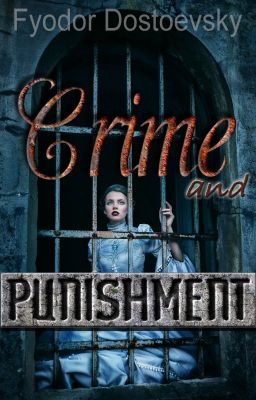
FydorDostoevsky
- Reads 104,406
- Votes 2,500
- Parts 42
Crime and Punishment is a novel by the Russian author Fyodor Dostoevsky. It was first published in the literary journal 'The Russian Messenger' in twelve monthly installments during 1866. Later, it was published in a single volume. It is the second of Dostoevsky's full-length novels following his return from 5 years of exile in Siberia. Crime and Punishment is considered the first great novel of his "mature" period of writing.
Crime and Punishment focuses on the mental anguish and moral dilemmas of Rodion Raskolnikov, an impoverished ex-student in Saint Petersburg who formulates a plan to kill an unscrupulous pawnbroker for her money. Before the killing, Raskolnikov believes that with the money he could liberate himself from poverty and go on to perform great deeds; but confusion, hesitation, and chance muddy his plan for a morally justifiable killing.
Cover made by the amazing Amber @The3dreamers.

FydorDostoevsky
- Reads 26,513
- Votes 902
- Parts 96
The Brothers Karamazov, also translated as The Karamazov Brothers, is the final novel by the Russian author Fyodor Dostoevsky. Dostoevsky spent nearly two years writing The Brothers Karamazov, which was published as a serial in The Russian Messenger from January 1879 to November 1880.
The Brothers Karamazov is a passionate philosophical novel set in 19th-century Russia, that enters deeply into the ethical debates of God, free will, and morality. It is a spiritual drama of moral struggles concerning faith, doubt, judgment, and reason, set against a modernizing Russia, with a plot which revolves around the subject of patricide. Dostoevsky composed much of the novel in Staraya Russa, which inspired the main setting. Since its publication, it has been acclaimed as one of the supreme achievements in world literature.

ArthurConanDoyle
- Reads 68,780
- Votes 2,691
- Parts 14
A Study in Scarlet is a 1887 detective novel by British author Arthur Conan Doyle. Written in 1886, the story marks the first appearance of Sherlock Holmes and Dr. Watson, who would become two of the most famous characters in popular fiction.
The book's title derives from a speech given by Holmes, an amateur detective, to his friend and chronicler Watson on the nature of his work, in which he describes the story's murder investigation as his "study in scarlet": "There's the scarlet thread of murder running through the colourless skein of life, and our duty is to unravel it, and isolate it, and expose every inch of it."
Cover by the wonderful @-capetown

JaneAusten
- Reads 41,924
- Votes 2,260
- Parts 42
Lady Susan Vernon, a beautiful and charming recent widow, visits her brother- and sister-in-law, Charles and Catherine Vernon, with little advance notice at Churchill, their country residence. Catherine is far from pleased, as Lady Susan had tried to prevent her marriage to Charles and her unwanted guest has been described to her as "the most accomplished coquette in England". Among Lady Susan's conquests in London is the married Mr. Mainwaring.
Cover by the lovely @Austened.

MarkTwain
- Reads 186,001
- Votes 3,503
- Parts 37
"The Adventures of Tom Sawyer" is about a young boy growing up along the Mississippi River.

LewisCarroll
- Reads 1,240,511
- Votes 13,081
- Parts 12
"Alice's Adventures in Wonderland" tells of a girl named Alice who falls down a rabbit hole into a fantasy world populated by peculiar, anthropomorphic creatures. The tale plays with logic, giving the story lasting popularity with adults as well as children.

LewisCarroll
- Reads 72,194
- Votes 2,000
- Parts 12
"Through the Looking-Glass, and What Alice Found There" is the sequel to Alice's Adventures in Wonderland. The themes and settings of Through the Looking-Glass make it a kind of mirror image of Wonderland: the first book begins outdoors, in the warm month of May (4 May), uses frequent changes in size as a plot device, and draws on the imagery of playing cards; the second opens indoors on a snowy, wintry night exactly six months later, on 4 November (the day before Guy Fawkes Night), uses frequent changes in time and spatial directions as a plot device, and draws on the imagery of chess.